


Discover how to hire backend developers skilled in SQL & NoSQL who build scalable systems. Partner with Techlynx Recruiters for elite software developers and cloud engineers.
Table of Contents
The Ultimate Guide to Hire Backend Developers Skilled in SQL & NoSQL
Key Insights Box (TL;DR)
- Modern backend systems require mastery of both SQL and NoSQL databases
- The best backend developers understand when to use relational vs. non-relational data stores
- Technical screening must go beyond basic query writing to include indexing, sharding, and replication strategies
- Techlynx Recruiters specializes in finding software developers and cloud engineers who excel in polyglot persistence environments
- A combined SQL/NoSQL skillset reduces technical debt and improves system resilience
Hire Backend Developers Who Master Both SQL and NoSQL
Here is the hard truth: Most backend developers claim to know databases. But very few truly understand the deep architectural tradeoffs between SQL and NoSQL systems. If you want to hire backend developers skilled in SQL & NoSQL, you need to look beyond resume buzzwords.
The best part? The right developer doesn’t just write queries. They design data layers that scale, recover from failures, and evolve with your product. Let us show you what separates exceptional engineers from the rest.
Why SQL and NoSQL Together Matter More Than Ever
Modern applications demand flexibility. You might need ACID transactions for your payment system while requiring lightning-fast read performance for your product catalog. This is polyglot persistence, and it is becoming the standard.
Here is why: No single database solves every problem. SQL databases like PostgreSQL offer rock-solid consistency. NoSQL databases like MongoDB provide horizontal scalability. The engineers who understand both can architect systems that leverage each tool’s strengths.
Look: The era of choosing one database type is over. Companies that hire backend developers skilled in SQL & NoSQL build more resilient, cost-effective, and performant systems. They avoid the costly migrations that plague single-database architectures.
The Critical Skills You Must Evaluate
When you hire backend developers skilled in SQL & NoSQL, your screening process must test specific competencies. Here is what elite software developers bring to the table:
SQL Mastery
- Complex joins and subqueries
- Query optimization and execution plan analysis
- Indexing strategies for read-heavy workloads
- Stored procedures and trigger design
- Transaction isolation levels and deadlock handling
NoSQL Expertise
- Document, key-value, column-family, and graph models
- Denormalization and data duplication strategies
- Sharding and partition key design
- Consistency models and tradeoffs
- Aggregation pipelines and map-reduce
Integration Knowledge
- ORM vs raw query tradeoffs
- Connection pooling and timeouts
- Caching strategies with Redis or Memcached
- Database migration tooling
- Backup and disaster recovery planning
The Hidden Cost of Wrong Database Decisions
Let us reveal something most recruiters miss. The database choice impacts every layer of your stack, from API response times to infrastructure costs. Poorly designed schemas create cascading failures.
The contrarian view? Many teams overcomplicate their database choices. They adopt NoSQL because it is trendy when a well-tuned SQL database would suffice. Conversely, they force relational models into document databases and suffer performance nightmares.
A skilled developer knows when to push back. They challenge requirements and propose simpler solutions. This is the nuance that transforms a good developer into a great one.
The Technical Screening Framework
To hire backend developers skilled in SQL & NoSQL, implement this screening approach:
Step One: Real-World Scenarios
Present candidates with a broken query and ask them to fix it. Give them a slow report and let them optimize it. Watch their thought process.
Step Two: Tradeoff Discussions
Ask: “When would you choose MongoDB over PostgreSQL?” Listen for specific criteria like data structure, scalability needs, and consistency requirements.
Step Three: Data Modeling Exercises
Hand them a business requirement and ask them to design the data layer. Evaluate their ability to think about access patterns, not just storage.
Step Four: Production Interview Questions
Ask about their worst database disaster and how they recovered. Look for ownership and continuous learning.
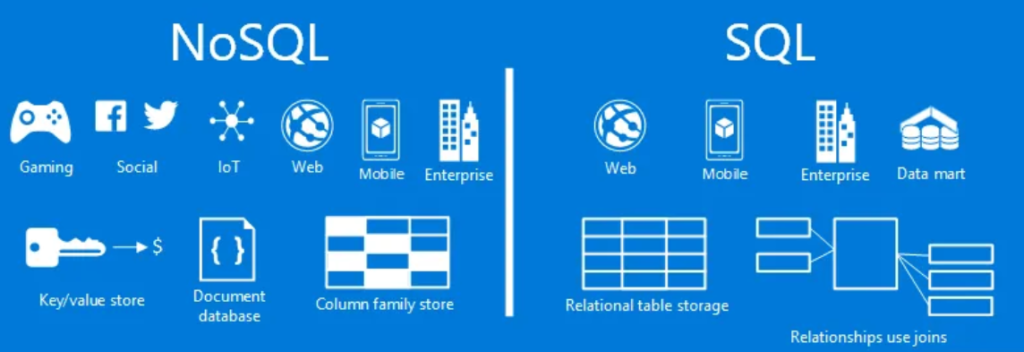
Comparing SQL and NoSQL: A Practical Framework
| Aspect | SQL Databases | NoSQL Databases | Hybrid Approach |
|---|---|---|---|
| Data Model | Relational, structured | Flexible, schema-less | Polyglot with boundaries |
| Consistency | ACID transactions | Eventual consistency | Tunable per use case |
| Scalability | Vertical scaling | Horizontal scaling | Strategic hybrid scaling |
| Query Language | SQL (standardized) | API-based or proprietary | Tool-specific adapters |
| Best For | Financial, ERP, reporting | Real-time, IoT, catalogs | Complex modern apps |
The Secret to Long-Term Success
Here is the insight we promised earlier. The developers who excel with both SQL and NoSQL share one trait: systems thinking. They do not view databases in isolation. They understand how data flows through queues, caches, and microservices.
This is why the best cloud engineers and software developers are database-agnostic. They master the underlying principles: CAP theorem, storage engines, and distributed consensus. Everything else is syntax.
When you hire backend developers skilled in SQL & NoSQL, you are hiring problem solvers who understand that databases serve business outcomes, not technical egos.
Why Techlynx Recruiters Is Your Partner
Techlynx Recruiters does not just match resumes. We evaluate real ability through engineering-first screening. Our candidates have hands-on experience with PostgreSQL, MySQL, MongoDB, Cassandra, and Redis.
We help you hire backend developers skilled in SQL & NoSQL who:
- Pass rigorous technical assessments
- Communicate design decisions clearly
- Own their code in production
- Adapt to evolving requirements
- Collaborate effectively with product teams
Our network includes elite software developers and cloud engineers who thrive in high-growth environments. We understand that hiring is about building teams, not filling seats.
Frequently Asked Questions
What makes a backend developer truly skilled in SQL and NoSQL?
A truly skilled developer understands the architectural tradeoffs between database types and can design data layers that balance consistency, availability, and performance. They write optimized queries, design efficient schemas, and handle production incidents calmly.
How can I test a candidate’s database skills during an interview?
Use live coding exercises with broken queries, design challenges that require schema decisions, and discussion questions about production incidents. Watch how they reason through constraints and tradeoffs.
What are the most common mistakes companies make when hiring backend developers?
They overemphasize framework knowledge and underestimate database fundamentals. Many interviewers ask about specific tools rather than core principles like indexing strategies or replication mechanisms.
Why do I need developers who know both SQL and NoSQL?
Modern applications rarely fit a single database model. Polyglot persistence lets you choose the right tool for each workload, reducing costs and improving performance. Developers with both skills reduce the need for multiple specialists.
How do cloud engineers relate to backend database decisions?
Cloud engineers design infrastructure that supports database performance and reliability. They configure replicas, manage backups, and optimize cloud costs. Database expertise is essential for effective cloud architecture.
The Challenge Awaits
Building a data layer that handles millions of requests while maintaining integrity is not easy. It requires developers who understand the subtle interactions between databases, networks, and business logic.
The average developer writes queries. The exceptional developer designs resilient systems that evolve with your business.
When you hire backend developers skilled in SQL & NoSQL, you are investing in your company’s future. You are building a team that can handle growth, outages, and new product features without rewriting everything.
Final Thought
The database is the soul of your application. Treat it that way. Choose developers who respect data as a strategic asset, not just another technical layer.
Remember: The best code is worthless if the data layer collapses under pressure. Hire for depth, not just breadth. Hire engineers who have wrestled with production databases and emerged with wisdom.
Build Your Engineering Team with Confidence
Techlynx Recruiters connects you with pre-vetted software developers and cloud engineers who excel in SQL, NoSQL, and everything between. We deliver candidates who make an impact from day one.
Need to augment your engineering team?
Contact TechLynx today to get vetted developers.