What to Look for in a CI/CD Pipeline Engineer

What to look for in a CI/CD pipeline engineer. Techlynx Recruiters connects US companies with software developers and cloud engineers.
Table of Contents
What to Look for in a CI/CD Pipeline Engineer for US Tech Teams
Key Insights Box (TL;DR)
- CI/CD pipeline engineers automate the path from code commit to production
- The best candidates understand security, observability, and rollback strategy
- Pipeline expertise reveals itself in failure handling, not tool lists
- Techlynx Recruiters helps US companies hire software developers and cloud engineers
- Elite pipeline engineers treat delivery speed as a product feature
What to Look for in a CI/CD Pipeline Engineer Before Your Next Hire
To know what to look for in a CI/CD pipeline engineer, evaluate automation depth, security integration, deployment strategy, and rollback fluency. Prioritize engineers who have owned pipelines in production over engineers who only list tools on a resume.
Here is the reality: Every US tech company claims to practice continuous delivery. Very few actually do it well. The gap between claim and reality lives in the pipeline engineer you hire.
The best part? Great pipeline engineers transform how your whole team works. Deployments become boring. Releases become routine. Rollbacks become painless.
Look: A weak pipeline engineer creates fragility that spreads everywhere. A strong one removes friction from every developer on your team.
Why Pipeline Engineering Is a Force Multiplier
Pipeline engineers do not build features. They build the system that ships features. Their impact multiplies across every developer in your organization.
Here is why this matters: A slow pipeline taxes every engineer every day. A fragile pipeline causes outages. A secure pipeline prevents breaches. The pipeline is infrastructure for your entire delivery process.
When US companies understand what to look for in a CI/CD pipeline engineer, they stop treating the role as a support function. They start treating it as a strategic investment.
The Definition Box: What a CI/CD Pipeline Engineer Does
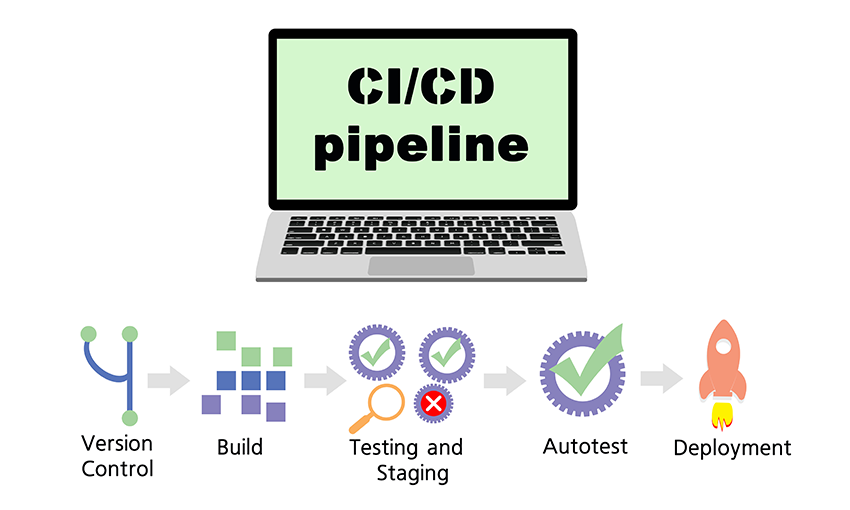
A CI/CD pipeline engineer designs and maintains the automated systems that build, test, and deploy software. The role spans source control workflows, build automation, testing integration, artifact management, deployment orchestration, security scanning, and rollback strategy. Pipeline engineers connect developers to production safely and repeatably.
The Contrarian Expert Tip: Rollback Skill Beats Deployment Skill
Here is my controversial take: Any engineer can deploy code. Very few can reverse a bad deployment gracefully under pressure.
Why? Because rollbacks expose real system understanding. Database migrations that cannot reverse. Feature flags that were never wired. Configuration drift between environments. These problems appear only when you must undo a release.
Ask candidates about their worst rollback. Ask how they made migrations reversible. Ask about feature flag strategy. Weak candidates give vague answers. Strong candidates describe specific incidents and specific fixes.
The Core Competencies US Hiring Managers Must Evaluate
Build Automation and Artifact Management
Pipelines begin with reliable builds. Evaluate real automation depth.
- Build caching strategies for speed
- Reproducible builds and dependency pinning
- Artifact repositories and versioning schemes
- Monorepo versus polyrepo build approaches
- Parallel build execution and matrix strategies
Testing Integration
Automated testing gates protect production. Evaluate integration experience.
- Unit, integration, and end-to-end test orchestration
- Test parallelization and flaky test management
- Code coverage reporting and quality gates
- Contract testing between services
- Performance and load testing integration
Deployment Strategy
How code reaches production defines reliability. Evaluate deployment fluency.
- Blue-green and canary deployment patterns
- Feature flags and progressive rollout
- Environment promotion and configuration management
- Infrastructure as code integration
- Zero-downtime deployment techniques
Security Integration
Pipeline security prevents supply chain attacks. Evaluate real depth.
- Secret management and rotation
- Static analysis and dependency scanning
- Container image scanning
- Signed commits and artifact verification
- Least privilege access for pipeline runners
Observability and Feedback Loops
Pipelines must report their own health. Evaluate monitoring awareness.
- Build duration and success rate tracking
- Deployment frequency and lead time metrics
- Change failure rate and recovery time tracking
- Alerting on pipeline failures
- Distributed tracing integration
Rollback and Recovery
Recovery separates mature teams from fragile ones. Evaluate this deeply.
- Reversible database migration design
- Feature flag kill switches
- Artifact retention for instant rollback
- Incident response integration
- Post-mortem culture and follow-through
Before and After: The Pipeline Hiring Transformation
| Dimension | Weak Pipeline Engineering | Strong Pipeline Engineering |
|---|---|---|
| Deployment Frequency | Monthly and stressful | Daily and routine |
| Rollback Speed | Hours of manual recovery | Minutes with confidence |
| Pipeline Reliability | Flaky and untrusted | Consistent and dependable |
| Security Posture | Manual checks and gaps | Automated scanning everywhere |
| Developer Experience | Frustration and waiting | Fast feedback and autonomy |
The Open Loop: What Elite Pipeline Engineers Reveal
Earlier I mentioned a critical insight. Here it is: The best pipeline engineers treat developer experience as their primary product.
But here is the deeper truth: Elite pipeline engineers measure their success by how little developers think about the pipeline. When deployments are invisible, the job is done well. When developers dread releases, the pipeline has failed.
When US companies understand what to look for in a CI/CD pipeline engineer, they look for this service mindset. Engineers who serve developers build culture. Engineers who guard gates build resentment.
Why Techlynx Recruiters Finds Pipeline Talent That Delivers
Techlynx Recruiters understands what US companies need when they search for what to look for in a CI/CD pipeline engineer. We screen for production ownership, not tool familiarity.
Our pipeline candidates demonstrate:
- Real build and deployment automation experience
- Security integration across the delivery chain
- Rollback and recovery design in production
- Observability and metrics instrumentation
- Cloud-native pipeline architecture on AWS, Azure, or GCP
We verify claims through practical scenarios and technical interviews.
Frequently Asked Questions
What skills matter most in a CI/CD pipeline engineer?
Build automation, deployment strategy, security integration, rollback design, and observability matter most. Tool knowledge is useful, but production ownership and failure handling reveal true ability.
How do I evaluate pipeline experience in interviews?
Ask about their worst deployment failure and how they recovered. Discuss rollback strategy, database migration reversibility, and feature flag usage. Listen for specific incidents rather than general claims.
Why is rollback ability so important?
Deployments are routine. Recovery is rare and high stakes. Engineers who design reversible changes protect revenue, reputation, and team confidence during incidents.
What mistakes do US companies make when hiring pipeline engineers?
They hire for tool lists instead of production experience. They ignore security integration. They skip rollback evaluation. These gaps create fragile pipelines that fail when it matters.
How does Techlynx Recruiters screen pipeline engineers?
We use practical assessments, incident scenarios, and system design discussions to verify genuine automation and recovery ability before presenting candidates.
The Challenge of Pipeline Hiring
Hiring a CI/CD pipeline engineer requires evaluating a role that touches every part of delivery. Standard interviews rarely probe recovery, security, or developer experience. You need scenario-based evaluation.
When US companies master what to look for in a CI/CD pipeline engineer, they build delivery systems that accelerate the entire organization. They ship faster. They break less. They recover quickly.
Final Thought
The best pipeline engineers are not the ones who know the most tools. They are the ones who have owned a pipeline in production, felt the pain of a failed rollback, and rebuilt the system to prevent it.
Choose engineers who measure their own pipelines. Choose engineers who make deployments invisible. Choose engineers who treat developer experience as the product.
Build Your Delivery Team with Confidence
Techlynx Recruiters helps US companies find exceptional CI/CD pipeline engineers. We connect you with software developers and cloud engineers who deliver from day one.
Ready to hire a CI/CD pipeline engineer who transforms your delivery?
Contact us today at +1(307) 449-2132 or +1(572) 234-1869 and discover how our specialized screening finds automation talent for American tech teams. Our rigorous evaluation ensures you hire engineers who perform. Your next great pipeline engineer is waiting. Reach out now and build the delivery system your product deserves.