



Accelerate product development. Access top Microservices Engineers experienced in distributed systems and cloud backends.
Table of Contents
Stop Hiring Coders: Hire Microservices Engineers Who Build Future-Proof Systems
The best part? Hiring a microservices engineer is completely different from hiring a standard Software Developer. If you are a tech startup scaling past the “Monolith” phase, you are about to make a catastrophic hiring mistake.
Here is the brutal truth: You don’t need a programmer. You need an architect who understands failure. The primary search intent here is not just about finding a developer; it is about finding a specialist who can untangle the chaos of distributed systems before it kills your product velocity. Look: we are going to show you exactly how to hire microservices engineers who actually deliver ROI, not just lines of code.
Why “Rockstar” Coders Fail in Distributed Systems
Most hiring managers look for raw coding speed. That is a fatal error. In a microservices environment, speed is irrelevant if the service cannot handle network latency or partial outages. When you hire microservices engineers, you are hiring for resilience, not agility.
Expert Tip: Generalists often treat databases like a monolith. True Microservices Engineers treat data as a decentralized responsibility. They understand the “Database per Service” pattern inherently, whereas a typical Software Developer will instinctively try to join tables across services—a cardinal sin that introduces tight coupling.
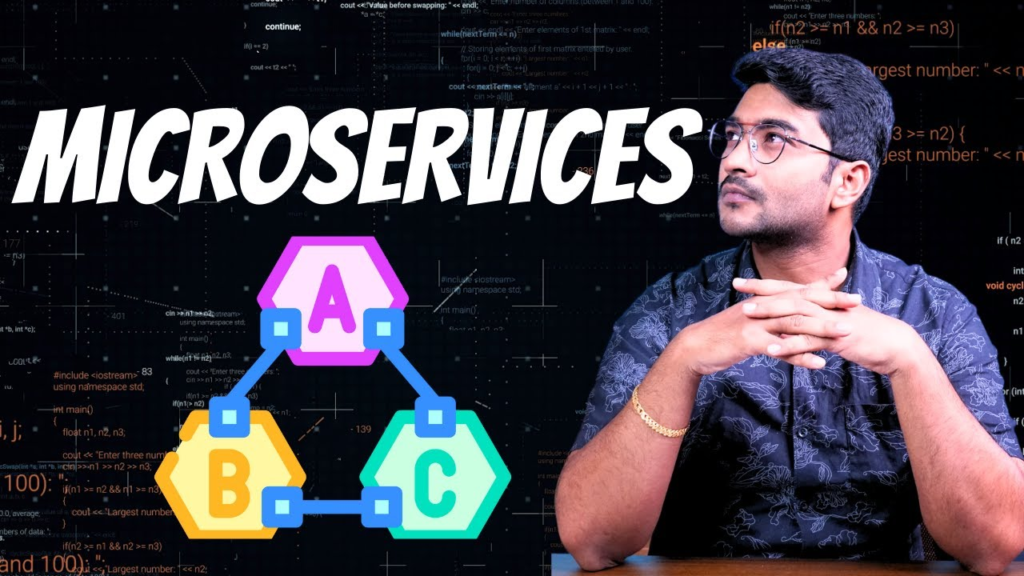
The Architectural Mindset vs. The Coding Mindset
To truly understand the difference, we need to look under the hood. Standard developers think in terms of “functions.” Microservices experts think in terms of “boundaries.”
The “Bounded Context” Test
During an interview, ask this: “How do you handle a scenario where Service A needs data from Service B, but Service B is down?” A coder will suggest an API retry. An elite engineer will suggest an event-driven architecture using a message broker, ensuring eventual consistency. This is the difference between a fragile system and a robust one.
The Anatomy of a Perfect Microservices Engineer
So, what does the ideal candidate look like? We aren’t just looking for Cloud Engineers who know AWS. We are looking for polyglot thinkers who understand the “Why” behind the “How.”
Key Insights Box:
- Core Focus: Fault tolerance and domain-driven design.
- Tech Stack: Deep knowledge of containers (Docker/Kubernetes) and messaging queues.
- The Red Flag: Anyone who suggests a shared database for microservices is an immediate red flag.
- The Green Flag: Familiarity with “Circuit Breaker” patterns and distributed tracing.
- The Bottom Line: They must prioritize operability over novelty.
The Hidden “Cost” of the Monolith
Many founders think a microservices architecture is more expensive to run. They are wrong. The cost of a monolithic codebase during rapid scaling is exponential. Every new Software Developer you add to a monolith actually decreases the team’s overall velocity due to merge conflicts and dependency hell.
The Definition Box (Snippet Bait):
A Microservices Engineer is a specialist who designs software systems as a suite of independently deployable services. Unlike traditional developers, they prioritize network resilience, decentralized data management, and automated infrastructure orchestration.
Where to Look and How to Vet
You cannot hire microservices engineers off a standard job board by posting a generic “Software Developer” role. You need to fish in specific ponds.
First, look at your own infrastructure. Are you using Kubernetes? If so, your engineer needs to understand “Operators” and “Custom Resource Definitions.” Don’t just test their coding; test their operational knowledge.
Second, focus on Cloud Engineers who have experience migrating legacy systems. Migration experience is the highest form of education for this role because it teaches the painful lessons of network partitions and data inconsistencies.
The “Before vs. After” Interview Strategy
To make this concrete, here is a comparison of how a standard developer and a microservices expert handle a request.
| Feature | Standard Developer (Monolith Mindset) | Microservices Engineer (Distributed Mindset) |
|---|---|---|
| Data Management | Creates a “Shared Database” for all services. | Insists on a “Database per Service” policy. |
| Error Handling | Throws generic HTTP 500 errors. | Implements “Circuit Breakers” and fallback responses. |
| Deployment | Focuses on deploying the “Whole App.” | Focuses on deploying “One Service” independently. |
| Debugging | Checks application logs on a single server. | Uses “Distributed Tracing” (e.g., Jaeger) to track requests across nodes. |
The “Open Loop” Strategy: The 10% Rule
I mentioned a catastrophic mistake earlier. Here it is.
The biggest challenge isn’t finding the talent; it’s keeping them. Microservices Engineers are often treated like “DevOps” resources, buried in YAML files and infrastructure minutiae. This is a surefire way to lose them to a competitor.
To retain top-tier talent, you must dedicate at least ten percent of their time to “Greenfield” projects—building new services from scratch, not just maintaining old ones. If you don’t offer this, they will leave. This is the secret to retention that most recruiters miss entirely.
The Technical Nuance: Eventual Consistency is Not a Bug
Look: most business owners panic when they hear “eventual consistency.” They want immediate data accuracy. However, when you hire microservices engineers, they will advocate for this pattern because it unlocks massive scalability.
If you want to assess this skill, give them a scenario involving an e-commerce checkout. Ask them: “The payment service confirms payment, but the inventory service is down. The customer sees a success screen, but the inventory isn’t updated. How do you fix this?”
An elite engineer will not suggest a synchronous API call that fails. They will suggest a saga pattern. They will explain that the inventory service can read the payment event from a message queue later to reconcile the stock. This proves they understand that in distributed systems, “eventual” is acceptable, but “failure” is not.
Conclusion: Build for Evolution, Not Today
Hiring for a tech startup is always a gamble. But when you hire microservices engineers, you aren’t just hiring for your current feature set; you are hiring for your company’s ability to evolve.
The market is flooded with “Full Stack” developers who know a bit of Docker. The market is lacking Cloud Engineers who understand the philosophy of domain-driven design. Don’t fall for the trap of hiring a generalist and hoping they figure it out. The cost of rebuilding a failed microservices migration is far higher than the cost of hiring the right Specialist from the start.
Frequently Asked Questions
How long does it take to hire a senior microservices engineer?
Typically, it takes longer than a standard hire because you must filter out generalists. A rigorous technical interview focusing on distributed patterns usually takes three to four weeks to find the right fit.
Can a Cloud Engineer transition to microservices easily?
Yes, but they must unlearn the idea of centralized management. Cloud Engineers understand infrastructure; they must learn application boundaries.
What is the most common mistake when hiring for this role?
Focusing on language proficiency rather than system design philosophy. A Java developer who knows Docker is not necessarily a Microservices Architect.
Should I hire a single Senior or multiple juniors?
Always hire a Senior first. A single Senior Microservices Engineer can establish the architecture and guardrails for the team. Multiple juniors without leadership will create a fractured, unmanageable system.
What is the cost of a bad hire in this niche?
The cost is massive. Beyond the salary, a bad architect can cause three to four months of re-architecture work, leading to downtime and lost revenue during a crucial growth phase.
Final Thought: The race to scale is not won by the company with the most code. It is won by the company with the most resilient systems. You are only as strong as your weakest service. When you are ready to stop firefighting and start innovating, you know where to look. Techlynx Recruiters LLC specializes in connecting startups with the exact talent needed to navigate the complexity of the cloud.
Need to augment your engineering team?
Contact TechLynx today to get vetted developers.
.